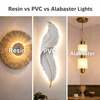
Resin vs PVC vs Alabaster Lights. Which one is better option??
4 min reading time
4 min reading time
Compare resin vs PVC vs alabaster lights to find the most durable, cost-effective, and low maintenance lighting material. Discover which option offers the best value for pendant lights, wall lights, and decorative fixtures — from budget PVC lighting to premium alabaster luxury designs.
When it comes to choosing the ideal lighting fixtures for your home, the decision often lies in the materials used. Among the most popular choices are resin, PVC, and alabaster lights. Each material has its own advantages and nuances that make them suitable for different applications and styles. In this comprehensive comparison of Resin vs PVC vs Alabaster Lights, we will explore the features, benefits, and ideal uses of each option, helping you make an informed decision for your next lighting purchase.
Before diving into the specifics of resin, PVC, and alabaster, it's essential to understand what each material comprises and how they are crafted. This knowledge will set the stage for understanding their functionality as lighting sources.
One of the most critical factors when deciding between Resin vs PVC vs Alabaster Lights is design. The aesthetic appeal of your lighting can significantly influence the overall ambiance of your room.
Resin lights come in versatile designs and can be molded into intricate shapes, allowing for modern and artistic creations. They often feature vibrant colors and unique finishes that can enhance any space.
PVC lights, while generally simpler in design, can be found in various styles, from minimalist to bold. Their affordability can encourage creativity in design without breaking the bank.
Alabaster lights exude timeless beauty. The natural variations in color and texture bring a unique character to each piece, providing a classic look that never goes out of style.
When selecting lighting for your home, considering durability and maintenance is crucial. Each material presents different levels of resilience and upkeep requirements.
The quality of light emitted by your fixtures plays a pivotal role in establishing the mood and functionality of your space. Here’s a comparison of how each material affects lighting:
Resin lights can be designed to offer a warm or cool light quality, depending on the bulb used, making them more adaptable based on your personal taste.
PVC lights tend to illuminate spaces evenly but can be limited in color temperature options. However, they offer practicality at an affordable price.
Alabaster lights provide a soft, diffused glow due to their translucent properties, making them perfect for creating a warm and inviting atmosphere.
As we become more energy-conscious, understanding the energy efficiency of your lighting options is paramount. With the rise of LED technology, all three materials can support energy-efficient bulbs.
Generally, energy efficiency is less about the material and more about the type of bulbs you use in your fixtures.
Budget is always a significant factor in selection decisions. Here’s how costs compare across Resin vs PVC vs Alabaster Lights:
Resin lights typically fall somewhere in the mid-range, providing designer quality without the hefty price tag.
PVC lights are often the most budget-friendly option, perfect for those looking to light up their space without spending too much.
Alabaster lights are usually on the higher end of the price spectrum due to their material's natural beauty and craftsmanship.
When assessing the best choice among Resin vs PVC vs Alabaster Lights, it ultimately boils down to your personal aesthetic preferences, budget, and the functionality you need from your lighting fixtures.
Each material has distinctive benefits that cater to different styles and requirements, making your choice unique to your space. Whether you lean towards the budget-friendliness of PVC, the artistic flair of resin, or the classic elegance of alabaster, there is a perfect lighting solution waiting to illuminate your home.
Ready to make your selection? Explore our extensive collection of resin, PVC, and alabaster lights today and find the perfect fixtures that align with your vision!